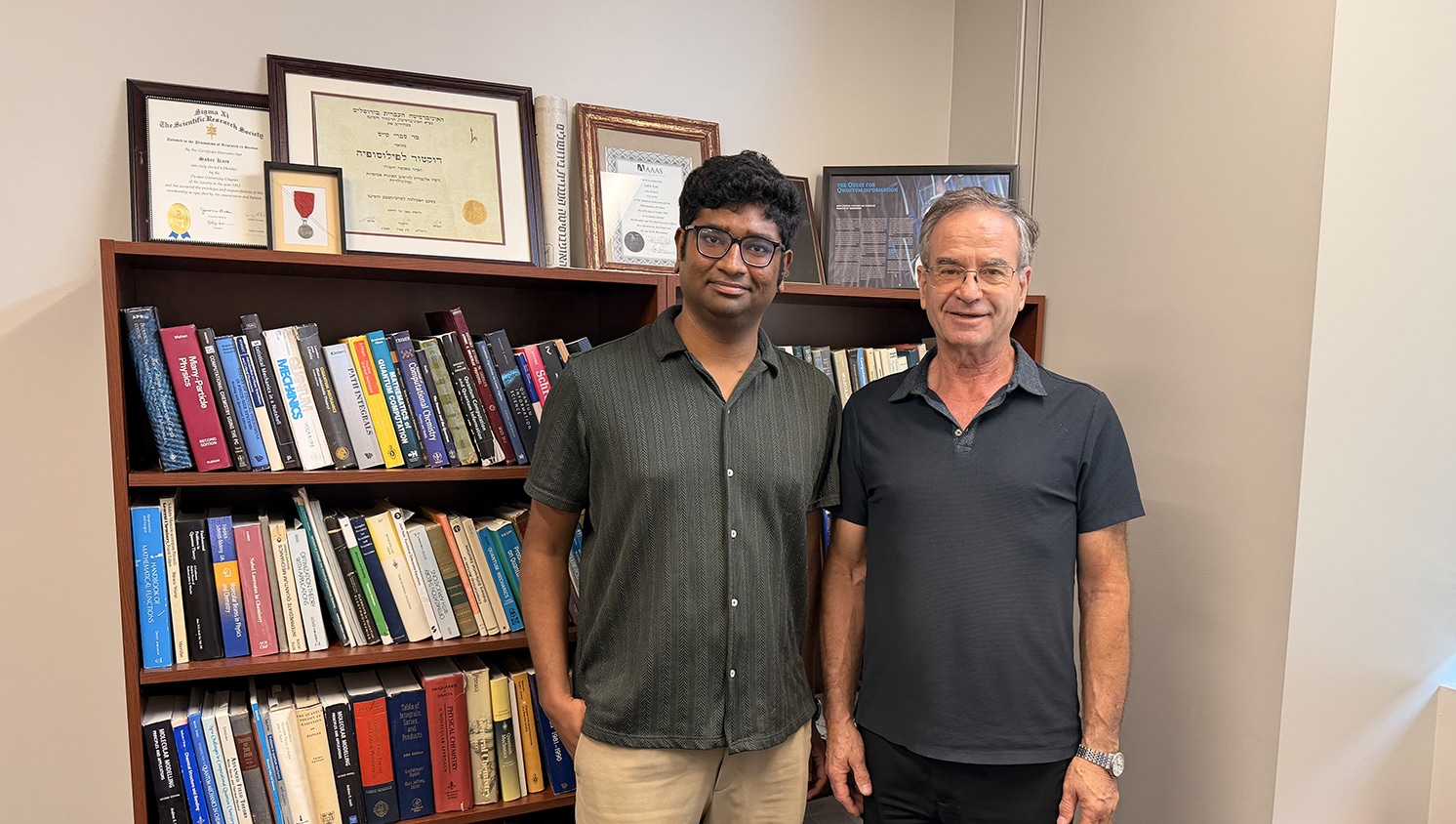
The Space research group at NC State, led by Professor Brian Space, a Fellow of the American Association for the Advancement of Science (AAAS), uses computational material science, ML/AI and computer simulations to rationally design novel formulations of matter. Predicting the behavior of adsorbates, like the 2026 Nobel Prize-winning Metal-Organic Framework Materials (MOFs), enables digital engineering of products that accelerate discoveries for Pharma, water harvesting, carbon capture and energy storage.
Inside the Space Research Group
The Science
Rational design of materials is a critical societal and technological imperative. Metal-Organic Frameworks (MOFs) are a class of porous adsorbates, recognized in the 2026 Nobel Prize in Chemistry, that perform ubiquitous tasks like water harvesting, dehumidification and chemical separations – these activities alone represent roughly 30% of all world energy usage. Such technologies will dominate our energy and sustainability future, providing widely available clean energy and potable water for drinking and agriculture.
A new research provides the microscopic resolution needed to move the field away from accidental discovery and toward the rational, deliberate design of materials for advanced gas storage and separation applications.
New research by the Space research group and their collaborators provides the microscopic resolution needed to move the field away from accidental discovery and toward the rational, deliberate design of materials for advanced gas storage and separation applications. This research avenue promises breakthrough materials for a more productive industry, a better society and a cleaner environment.
The Impact
Nature has provided us a plethora of important molecules with similar sizes, shapes and chemistry but very different uses and abilities. A better method for separating similar molecules, such as propylene and propane, has been discovered through a novel mechanism.

A new technique by the Space research group, in collaboration with their world-leading experimental partners from Professor Bu’s experimental materials group at Nankai University, discovers performing computational material science in a virtuous cycle of iterative discovery.
Together, they discovered and demonstrated a previously unrecognized mechanism, called “cooperative sorbate-sorbent adaptation,” in a new flexible metal-organic framework (Flex-Cd-MOF-3). This was first identified through computer modeling conducted by then-graduate student Dr. Megan Mulcair at NC State University.
The Future
By mentoring the next generation of researchers and pioneering digital models for carbon capture, the Space research group contributes to NC State’s status as a hub for global sustainability. Their work bridges the gap between high-level theory and real-world environmental solutions—ensuring a greener, more resilient future for both the university and the world.
The Space research group partners with the open-source Open Molecular Software Foundation (https://omsf.io/) and Collaborations Pharmaceuticals (https://collaborations.com/about) to make their work accessible to both the world scientific community and industry partners.
- Categories: