Quantum Walks Accelerate Understanding of Protein Function
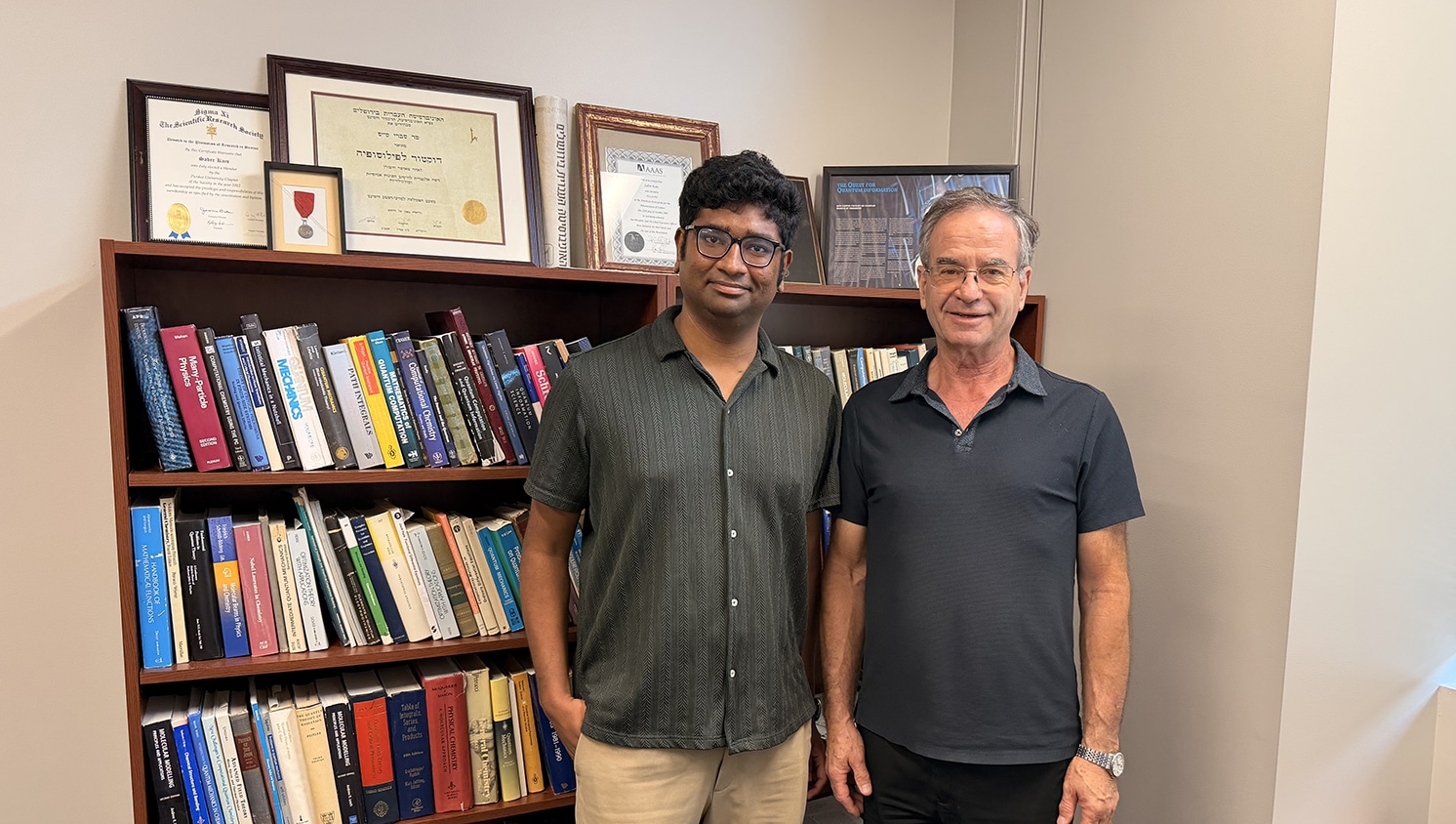
Researchers at NC State University have developed a quantum computing method to identify the most important amino acid residues in proteins by modeling them as networks and analyzing them with continuous-time quantum walks (CTQWs). The research was led by the Kais research group at North Carolina State University and involved a multidisciplinary team from the departments of Chemistry, Electrical and Computer Engineering and Physics.

By modeling proteins as networks, the researchers used quantum walks to capture how information propagates through multiple pathways simultaneously. A significant finding of this methodology is that the “walker” lingers longest where the residues that matter most to the protein’s function are located. The team validated this approach across a large set of proteins and successfully implemented proof-of-concept examples on IBM superconducting quantum computing hardware.
Ultimately, this research advances the integration of quantum computing techniques with biology, helping lay the foundation for future quantum-enabled methods in the life sciences as hardware continues to improve. This work moves the field toward a more efficient and accurate understanding of protein mechanics, with direct benefits for drug discovery and disease research.
The paper “Continuous-Time Quantum-Walk Centrality for Protein Residue Interaction Networks” appears in the Journal of the American Chemical Society (JACS).
The Kais Research Group gratefully acknowledges the support and funding provided by the U.S. Department of Energy (DOE) Office of Basic Energy Sciences (Award No. DE-SC0026309).
“Continuous-Time Quantum-Walk Centrality for Protein Residue Interaction Networks”
DOI: 10.1021/jacs.6c08053
Authors: Shah Ishmam Mohtashim, Manas Sajjan and Sabre Kais*, NC State University
Published: June 26, 2026
Abstract: We present a quantum-dynamical framework for identifying structurally and functionally important residues in proteins based on continuous-time quantum walks (CTQWs) on weighted residue–interaction networks constructed from experimentally resolved structures. By mapping the weighted adjacency matrix to a Hamiltonian, residue importance emerges from the long-time averaged occupation probability, confirmed analytically through its spectral decomposition. Across a data set of 150 proteins spanning diverse structural and functional classes, CTQW centrality exhibits consistently strong agreement with classical eigenvector centrality in identifying central residues, while extending beyond it through incorporating signatures of quantum interference. Analyzing the time-averaged quantum transition matrix reveals consistently larger spectral gaps than the classical random-walk operator. Furthermore, biological relevance is confirmed through recovery of experimentally established functional residues in proteins kinase A and oxytocin. CTQW-derived centrality rankings are accessible on near-term intermediate-scale quantum hardware, as we demonstrate through a proof-of-principle implementation on IBM superconducting quantum hardware. These results establish continuous-time quantum walks as a computationally tractable framework for protein network analysis, that connects network theoretical treatments of protein structural biology to continuous-time quantum walk dynamics.


